
25 Hard-earned Lessons Learned – One soundbite at a time

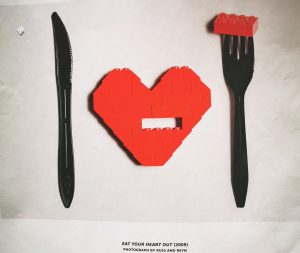
photograph of a heart as a snack
Photo Credit: Russ and Reyn
toilet paper on a chair for taking

In these uncertain and unprecedented times of social distancing and self-isolation, we still have so much…even toilet paper!

I don’t get it. Maybe it’s because I was born and raised in a small town, pop. 34,000 called Moose Jaw, Saskatchewan, Canada. Google it! I had it all on the prairies – big open sky, flat prairies where you can see forever, and the friendliest people in the world. Why would I leave? The answer can be found in a number of boxes.

baby in a makeshift playpen a chip box
Fulfilling a prophecy

In fact I paid a tribute to these boxes in my commencement address titled “On Boxes and Belonging” for the 2018 graduating class of internationally educated and trained professionals at Ryerson University’s The G. Raymond Chang School of Continuing Education.

Unpacking and packing these boxes meant carrying and storing hard-earned lessons learned from country to country. Learning weighs a ton so I’ve curated my top 25 hard-earned lessons learned so here you go, one soundbite at a time in random order because life is random.

Lesson 1 – Schedule time to dream. Freely.

You don’t need to be a billionaire to do it. No one can buy time. Give it a try. Time gives us creativity.

Lesson 2 – Reflection does not mean reliving the past.

My two guest speakers this week reminded me to remember and share my lessons learned…so here they are.

Lesson 3 – Mentors are everywhere.

You don’t need to always ask. You just need to listen well to find them. Be respectful and reasonable because they mentor many.

Lesson 4 – Doors always appear.

If you are present, you will see opportunities and have a choice to walk through the door or not.

Colour blind?

Lesson 5 – Be “colour blind”. Not everyone is.

People will judge you by the way you look. Those who aren’t “colour blind”, tread carefully. Don’t let them stop you from being who you are.

Lesson 6 – Listen, always listen. Listen to both your heart and your head.

Learn to trust your instincts. If you feel queasy and uneasy, heed the red flags. But if your gut says go, then run and don’t look back.

Lesson 7 – Know what makes your parents happy.

It’s not always about you. After all, they gave you life.

Lesson 8 – Wear even walk in another person’s shoes.

Of course, they won’t always fit but only then you will know empathy.

Lesson 9 – Draw and know your line in the sand. Now.

Know in advance so when you’re asked to cross it, usually in crisis situations, you won’t hesitate and know what to do.

Lesson 10 – Know when to quit. It’s ok.

Seth Godin, Marketing Guru calls it “The Dip”. Stop when all you have is a hammer and everything starts looking like a nail.

Lesson 11 – Handle unbridled passion with care. It needs the cross and skull bones hazard label.

Don’t get burned. Passion is poison if you let loose. Be alert. Always!

Lesson 12 – The toughest battle will be the one you have with yourself.

Put pride aside so that you can put food on the table. Ask for help. Help is everywhere – open heart, open mind, and open arms.

Lesson 13 – Always be a student.

Be it washing dishes or windows, creating software or songs, look at life like a student. Don’t think you are the smartest person in the room. Learn more.

Lesson 14 – Know how to fall. Properly.

You will be caught. Get up again.

Lesson 15 – Adapt. Accept. Grow.

Nothing is forever. Unless it’s change. “Perspective is the function of experience.” ~ Brené Brown, Professor, University of Houston. Adapt to change and gain more perspective.

Lesson 16 – People can be anything but predictable.

Dig a little deeper and go beyond the surface to spot patterns in behavior. But don’t bet the farm on it. People are unpredictable.

Lesson 17 – Grace is not just a name but a virtue.

What comes with growth is grace.

Lesson 18 – Remember it takes two to tango.

When you think you have all the bases covered, especially in crucial conversations, keep finding other ways to connect and increase the probability of understanding.

Indra Nooyi – Former CEO Pepsi

Lesson 19 – Know the politics. Don’t play them.

“Be aware of politics but don’t play them.” ~ Indra Nooyi, former CEO at Pepsi. Where are the “landmines”? Find great mentors to help you avoid them.

Lesson 20 – Common sense is not common. Everyone has limits.

No one is perfect. Loyalties affect livelihood and there are limits to how much one can do to help. Give people the benefit of the doubt. Look for goodness in others.

Lesson 21 – You don’t need much to be happy.

What does happiness mean to you? Not your parents, not your spouse or partner, not your friends or your colleagues. What does happiness mean to you?

Lesson 22 – No learning is lost.

Even when you come in second. As a striver, it’s hard not to come out ahead or on top but you move on.

Lesson 23 – Don’t look away from the truth.

Even when it hurts. Especially when it hurts. The truth circles back so you get a second chance to learn … even a third.

Lesson 24 – The Universe will unfold as it should.

Timing is everything. Know when to go with the flow and when to course-correct.

Lesson 25 – Believe.
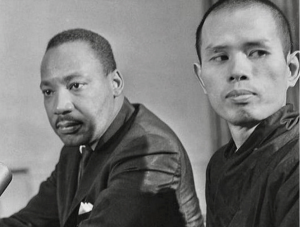
MLK and Thich Nhat Han
Young Martin Luther King & Thich Nhat Hanh

Believe the universe is interconnected. If you do harm, it will ripple like a pebble striking water. If you do good, it will travel the same path and last for an eternity.
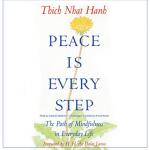
“The source of love is deep in us, and we can help others realize a lot of happiness. One word, one action, or one thought can reduce another person’s suffering and bring them joy. One word can give comfort and confidence, destroy doubt, help someone avoid a mistake, reconcile a conflict, or open the door to liberation. One action can save a person’s life or help him take advantage of a rare opportunity. One thought can do the same, because thoughts always lead to words and actions. If love is in our heart, every thought, word, and deed can bring about a miracle. Because understanding is the very foundation of love, words and actions that emerge from our love are always helpful.” “Peace is Every Step” ~ Thich Nhat Hanh .

3 Important Lessons Learned on International Women’s Day 2020

IWD 2020 Celebration
Maya Kolaczynski McKinsey Canada

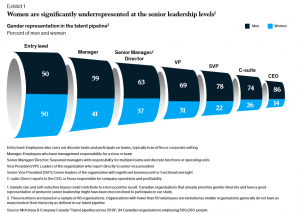
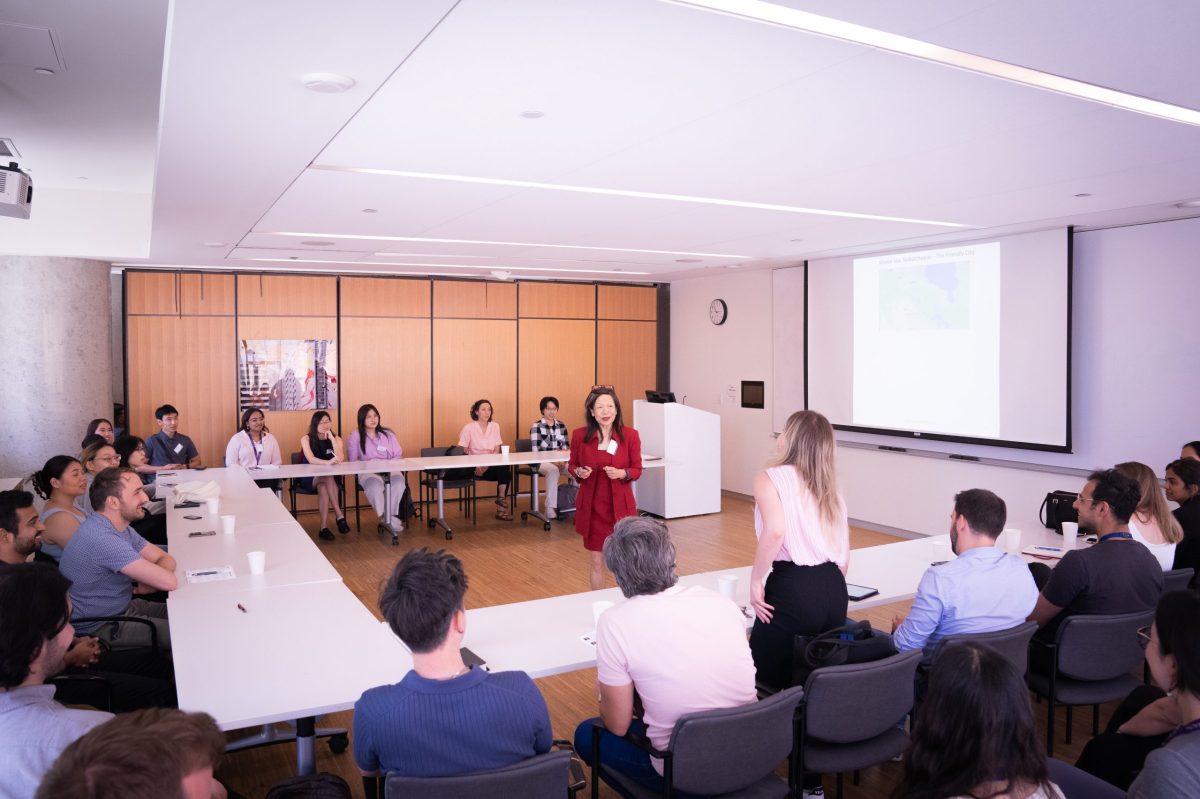
Stunned, we listened intently while our keynote speaker, Maya Kolaczynski from McKinsey Canada gave us the stats and facts from McKinsey’s report:  “Women Matter – The present and future of women at work in Canada” June 2019.

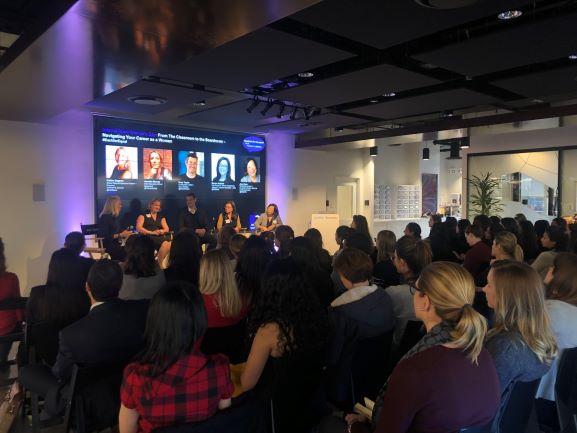
I was still reeling from the stats as I sat with our panel which followed Maya’s talk last Thursday at JLabs Toronto’s “International Women’s Day: From the Classroom to the Boardroom – Navigating Your Career as a Woman”. How could so little change from 40 years ago when I was an earnest young tax auditor at the start of my career? What lessons did I learn from my time at JLabs Toronto?

IWD 2020 – Lesson #1

The “leaky” talent pipeline reminded me that the under representation of women has been around for a very long time – 40 years and counting? The report showed modest progress since 2017 toward gender equality at the entry level. But the biggest gap still exists between men and women beyond the entry level

“None of the companies on the TSX 70 index – a cross section of the largest and most heavily traded Canadian stocks – listed a woman as its CEO.” 5.

IWD 2020 – Lesson #2

I have been and still am a strong proponent of mentorship, having developed a successful professional mentorship program for newcomer professionals. But I had neglected to also include sponsorship.

And although I also understand the importance of sponsors, I was abruptly “woke” when Maya presented the power of sponsorship on one’s career.

“Sponsors play a critical role in an employee’s career development and advancement … sponsors will introduce their proteges to influential connections, highlight their work to senior leaders, and recommend them for jobs and promotions.”

IWD 2020 – Lesson #3

The moment I made this immediate and gigantic mind shift towards sponsorship, I realized how I can help young women plug “the leaky talent pipeline”! Young women like our emerging and new scientists in the audience and who introduced themselves and overwhelmed me with their honesty, transparency, and vulnerability. Their authentic desire to up-skill was refreshing and I left the event knowing they will leave the world a better place. And there is no time like the present!

My sincere thanks to Amanda Raponi and #JLabs for hosting this special IWD event, Caitlin Gagnon, our moderator Global Head of Executive Search-Pharma, Johnson & Johnson, and my co-panelists: Jennifer Moody, COO Morphocell Technologies, Drew Taylor, CEO & Co-Founder, Acorn Biolabs and Marian Nakada, VP, Venture Investments, Johnson & Johnson Innovation – JDCC for sharing their sage advice, and Maya Kolaczynski for sharing McKinsey Canada’s “Women Matter” report. #womenhelpingwomen #menhelpingwomen #whywenetwork  

Parasite – The Brilliance of Bong

Don’t be in such a hurry to grow up! It’s uncomfortable counting the minutes because the hours, days, years just don’t seem to be enough.

There’s SO much left to do. People to meet, projects to finish, films to watch. Who knew that the Academy Award-winning film, “Parasite” would be voted the best picture not only of 2019 but also in my humble opinion, of all time?

Humanity is full on in “Parasite” as we watch the two families, the wealthy Park family and the destitute Kim family, swerve, collide, back up, only to do the “dance” again and again.                                                                       

“You’re not good enough. You’re not smart enough. You’re not like me,” They tell him, with that extra little jab and twist. Sometimes you start believing Them instead of believing yourself. It happens when you lose your livelihood, your faith, and your self-respect. It happens in a heartbeat. and it happens to us all … and more than once. Survival means focusing on today, the present, because tomorrow may never come. “Survival of the fittest” takes on a new meaning after adversity strikes. Your world suddenly shrinks and fits on a pinhead – shelter and food first. The Kims know it all too well.

Mr. Kim’s ability to feed his family defined his self-worth as he tried to perfect the art of folding pizza boxes. The Wealthy Parks turned their noses up, complaining about “The Smell”, the smell of poverty, the smell of Mr. Kim, so offensive to The Wealthy Parks.  This constant shredding of dignity in front of Mr. Kim is visceral and unrelenting right up until the end of the film when you shall see what remains.

It reminded me of the lyrics of Joni Mitchell’s song “Big Yellow Taxi” – “You don’t know what you’ve got till it’s gone.” But I won’t spoil it for you. Just know the “Brilliance of Bong” shone brightly. You may need your sunglasses. And you won’t be disappointed.

Fail Fast? Not so fast …

I shudder each time I hear “fail fast”.  Words are gold – precious and not to be taken lightly. Honour your words. Failing is not an Olympic sport. It’s not as easy as it looks when you crash into the boards, fall on the slopes, turn an ankle and then dust yourself off, pick yourself up, and forge ahead and sometimes limp to the finish line.

MsBizWiz pondering
MsBizWiz

If I’m not mistaken, “fail fast” means to not dwell but to iterate, rapid prototype, A/B test, push boundaries, be daring, be courageous, be bold until you find a solution, an answer, a way to cross the “finish line”. Failing hurts. We don’t live in the hope we fail, do we?

Bianca Andreescu, our Canadian tennis phenom, prepares for her matches with visualization and meditation. “Working your mind (is important) because at this level everyone knows how to play tennis. The thing that separates the best from the rest is just the mindset.”

My Top Ten+ Losses and Gains (not in any order of importance):

  1. Loss of Country – Embrace the World.
  2. Loss of Home – Know how “home” truly feels.
  3. Loss of Job – Know work is not your worth.
  4. Loss of Career – Gain creativity.
  5. Loss of best friend – Gain acceptance.
  6. Loss of spouse – Know truth.
  7. Loss of all possessions – Know peace.
  8. Loss of mind – Gain self-compassion.
  9. Loss of confidence – Gain courage.
  10. Loss of sibling – Gain acceptance.
  11. Loss of health – Gain patience.
  12. Loss of business – Gain perspective.
MsBizWiz Thumbs Up
MsBizWiz Thumbs Up

Every loss and gain effects change. Through the lenses of loss, we endure, grow, and become more humane and maybe even more human. As we say good-bye to 2019 and position ourselves for a new year, a new decade, learn, learn fast. Listen, listen attentively. Lead, lead authentically and dream a little dream.

Convergence

Last Friday night, we were three women left standing, or dare I say, “swimming” in our community centre’s pool out of twelve who had started in “Older Adult Swim One” (very tentative beginners) nine weeks ago.

Like a wet bathing suit, my fear of water still clung to me. But that night, it felt different. The water was warm, almost inviting after coming out of the cold. The pool was all ours. The other classes finished a week earlier. So peaceful, so calm, and under the watchful eye of Andrew, our Gen Z instructor, we got to practice on anything we wanted.

We all tread water for awhile, arms and legs going off in all directions, different speeds, awkward motions with our life jackets on until we tired out.

Then while the others were swimming, I tried to float (again) on my back. I tried everything during these nine Friday lessons. Missing a few didn’t help. I floated with the noodle, that lengthy lifeline.

I tried to float without the noodle still gripping tightly to the pool edge with one hand and then letting go. I tried visualization but this jack knife pose sunk me. I tried positive self talk but I had too much on my mind. I tried to relax but I kept breathing at the wrong time so that water kept going up my nose.

Then I stopped trying so hard and resorted to a silent prayer. “Please if there is a God, let me float even for 2 seconds.” I let go of the edge and I finally felt this odd sensation for first 2 seconds, then again for 3 seconds. Was this floating? I could hear cheers from my swim-mates and Andrew. “You did it!” I did? I did! Funny how moving towards your goal can feel so empowering and motivating even for two seconds. I walked out of the pool wondering when I could get back in again to experiment and try again.

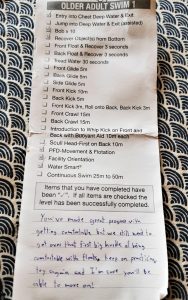
My Swim Report Card

I did jump into the deep end!

Our “report cards” were displayed on the table as we exited. We should have given Andrew a medal for bravery. He survived teaching adults for the first time. My swim mates perfected their kicking and gliding. We all had our small victories. But as in all victories, it is the journey we revel and relish. We started out as strangers, four generations – Gen X, Y, Z plus Boomer, as equals in a learning environment that made us braver, friendlier, and kinder. #whenweallwinweallwin   

Learn by Doing

I would like to spend the rest of my life creating social experiments, the simpler, the more powerful. Take for example, the social experiment by Daniel Pink. He quickly captured the attention of the graduating Class of 2016 at Georgetown University . It only took 20 seconds but it was unforgettable.

Inspired, I created my own social experiment although it is still taking shape even after 2 years. After teaching my first networking workshop in July 2017, our twelve adult learners decided they wanted to stay connected to one another. So I asked them if they would like to me to give them a “challenge” to complete and we would compare notes in a follow up meet up in six weeks which they agreed.

And although they leaned more towards introversion and didn’t know one another, they seemed to genuinely like one another. I often wondered what would happen if we threw together people randomly. What ideas would form? What types of conversations would emerge? Would they be able to build new relationships after a casual meet up? Would there be friendships formed, mentorship opportunities matched, even a little romance perhaps? I hope. Fingers crossed.

Random collisions

It’s been an exciting, this experiential learning. We’re still tweaking our format but after 14 Drop Ins, we’ve come accustomed to the random pairing of people, at times supported with prompt questions which are sent beforehand. I can observe and detect the range of emotions in their body language and facial expressions each time I approach a pair to ask if they are ready to switch partners. Everyone meets at least 4 -6 new people by the end of the evening.

Dream Network

Our Dream Networkers are courageous, compassionate, and caring people. Yoda would be proud as they “do or do not. (They know) there’s no try.” I also learn a lot from everyone. Meeting new people is not easy. We are vulnerable and manage a lot of different fears and anxiety. But once we realize our fear is exaggerated, then it becomes easier to face. When we visualize the best scenario, we’re energized and motivated to face our fears. And each time we meet someone new, we begin to trust ourselves a little more and gradually, we become more calm and confident and then we look for ways to help others. It’s like a dream and then becomes a reality.

OK Boomer – the meme that just won’t go away

It’s Ok. Ask a Boomer. We’re not dead. Not yet. My student and I were walking to the subway early November when suddenly a young man (evidently eavesdropping on our conversation about technology and Boomers) from behind yelled out, “What’s a boomer?”

“Excuse me, a what?” a definite sign of an aging Boomer. Is he serious? Does he really not know?

“Ask your parents … or maybe your grandparents.” I winced with one eyebrow arched while sizing up his age. “It’s a category, a demographic like you’re a Millennial or maybe a Gen Z-er. Got it?”

He nodded, “I had no idea.”

I learned later that he knew. His question was a twist on the meme, “OK Boomer”. It had been making its rounds on the Internet. OK Boomer is slang for dissing out-dated opinions coming from the Baby Boomer generation and older. It’s the opposite of “OK”.  I was the one who had no idea.

Here’s a handy reference updated from last year by Mental Floss on who’s a Boomer and who’s not:

  • The Silent Generation: Born 1928-1945 (73-91 years old)
  • Baby Boomers: Born 1946-1964 (54-73 years old)
  • Generation X: Born 1965-1980 (38-54 years old)
  • Millennials: Born 1981-1996 (22-38 years old)
  • Gen Z – Post-Millennials: Born 1997-Present (0-22 years old)

I despair. This inter-generational warfare and anti-Boomer sentiment can be quite harsh and cruel. Andrew Ferguson, staff writer (also a Boomer) at “The Atlantic” recently published  “Everyone Hates the Boomer, OK?” and informed us that while memes come and go quickly, as Boomers we’re still stuck on “OK Boomer”.

Gen Zers decided to have printed T-shirts inscribed with “OKAY BOOMER HAVE A TERRIBLE DAY.” ~ New York Times . More ill will putting our world on tilt. We need to take a step (several steps) back to get some perspective.

Perspective – What the Experts Say

Daniel H. Pink, former Vice-President, Al Gore’s speechwriter, is the author of best-selling business books about motivation and sales.  Pink opened his 2016 commencement address to the graduating class of (still Millennials) at Georgetown University with his clever 20-second social experiment on perspective-taking and showed why “as we grow in our career and gain more power, we tend to lose our perspective-taking ability and to keep it in check.”

Stephen R. Covey, author of “The 7 Habits of Highly Effective People” on perspective: “Valuing the differences is the essence of synergy – the mental, the emotional, the psychological differences between people. And the key to valuing those differences is to realize that all people see the world, not as it is, but as they are.”

Why Two Perspectives Are Better Than One

We gain more perspective by getting outside our comfort zone, meeting new people, and learning new things. At the same, we amp up our empathy. But there are times when empathy doesn’t factor into the human equation:

  1. “We just finished our first meeting so you might like to join us for the next one. Well, maybe not as you can see, we’re much younger than you.” 
  • “She’s been around a long time. Honestly, our ideas are way better. Why doesn’t she just let us take over?”
  • Then there is silence in a working group. Every once in awhile, heads pop up from their screens with wide-eyed stares and still not a word is spoken.

Can’t we find some common ground to collaborate and value our differences? Claire Kennedy, Chair of the Governing Council of the University of Toronto in her convocation message at St. Michael’s College this November, “This is the time when the world urgently needs more grace.”

Perspective and Grace

How do we gain more perspective? One way is to get outside your comfort zone. In my previous post, getting outside your comfort zone means overcoming fear, a work-in-progress.

Standing in the queue at the grocery store recently, a Millennial was in front of me. She turned and greeted me. We had met last year at an ideas summit. We ended up comparing notes on swim lessons which left me inspired, having learned a new strategy on how to overcome my fear of water. Her name is “Grace”. The world urgently needs more grace.

Perspective and Kindness

George Sanders teaches creative writing at Syracuse University. His debut novel “Lincoln in the Bardo” won the 2017 Man Booker Prize.  In “Congratulations … By the Way – Some thoughts on Kindness” based on his convocation address for the Class of 2013 at Syracuse University, Professor Saunders is haunted by his memory of a new kid in his 7th Grade named “Ellen” and why to this day, he still remembers her. His two “million-dollar questions” were:

  1. “Why aren’t we kinder?

Apparently, we have these three “built-in confusions”:

  • “We’re central to our universe.” Our story is the only story, the only one that matters.
  • “We’re separate from the universe.” – There’s “Us” and then the rest of them.
  • “We’re permanent.” – You’re going to die but not me.

OK Millennial. OK Boomer.

  • “How do we become kinder?”
  • “Kindness is hard. … Becoming kinder happens naturally with age. As we get older, we come to see how useless it is to be selfish… We get our butts kicked and people come to the rescue and we’re not that separate, and we don’t want to be. Most people, as they age, become less selfish and more loving.”

OK Boomer. OK Millennial.

To the graduating class of 2013 (still Millennials), George Saunders ended his speech: “Your life is going to be a gradual process of becoming kinder and more loving:  Hurry up. Speed it along. Start right now.”

Why? Because the world needs more “Grace”.

One thing Warren Buffet can’t buy on Amazon on Black Friday – time

Black Friday is no ordinary Friday. Big box retailers like Amazon are having the “biggest ever Black Friday” starting one week in advance, of course. Although it’s Prime Time on Amazon, Warren Buffet, the highly successful investor, and us ordinary folks would be hard pressed to buy time. So “I better be careful with it (time). There is no way I will be able to buy more time”, Buffett cautioned his friend, Bill Gates, in their 2018 interview.

Billionaires, Gates and Richard Branson, believe we need to “schedule time to just dream and think freely.” As a non-billionaire, I schedule my dream time efficiently – while I am dreaming. Clarity comes often just before I open my eyes. Allowing our minds to rest and wander gives us access to creativity. Time gives us creativity.

I met Frank O’Dea, co-founder of Second Cup, in 2013 and again in 2018. His struggle with alcohol and abuse is remarkable in “When All you Have is Hope”.  In “Do the Next Right Thing – Surviving Life’s Crises”, he outlined the need to:

  • First find peace.
  • Draw on a higher power.
  • Do the next right thing.

Take the time. Time gives us peace.

I once envied youth for all the time they have ahead of them. I urged them to not waste one single second.  Of course, they laughed at me. They have all the time in the world, don’t they? Apathy perhaps?

Comfortably past mid-life now, I no longer envy nor worry but watch with wonder the way youth race through life at Mach 9.6 speed. What will they do with all that time on their hands? More importantly, what will time give them? More opportunities? More wisdom, experience? More apathy? (surely not)

Will they meet new people #IRL (in real life)? Will they gain new perspectives by learning from others unlike them? Will they rise like Frank O’Dea when faced with unfathomable struggles? Time will tell.

I’ve met Sandra Shamas . When asked if she is a comedian, she says, “only if they laugh”. “My Boyfriend’s Back and There’s Going to be Laundry” was a big hit. We’re the same age. I borrowed a math “quiz” from her Show while making not too fine a point about the value of mentorship and experience. “How much time do we have left to live?” I had asked during a keynote for a bewildered group of aspiring entrepreneurs a few years ago.

We’ve got 30 years if our stars align properly. Sandra had asked: “What’s that in days?” 10,950 days, not a heck of lot. Try hours? 262,800 hours. Really? 15,768,000 minutes. 946,080,000 seconds, yep, that’s all we’ve got.

Looking back 30 years, I was the same age as they were that day. I asked them how many years separated us. 30 years. I then asked them to reflect on their lives so far and what they hoped to accomplish in the next 30 years. I asked them to think about how many more stories they would have to tell in another 30 years.

Then I shared with them a quote from Lubna Olayan now the first Chairwoman of a Saudi bank and one of the most powerful and influential women in the world according to TIME, Forbes, and Fortune. In “Fortune September 2015 , she said: “The more challenges you face in life, the more of life you experience – this lived experience gives one the “influence” to impact others’ lives.”

As mentors and mentees across the generations, we would make time to listen to understand one another instead of dismissing ourselves as Millennials and Boomers. We might learn something from one another that might help us save time. Anyone need more time?

Time gives us opportunities to share our experience and knowledge. Lifelong learning takes a long time, a life time. regardless of our age. Why not collaborate and co-create? Time is ticking so we best start now. #cometogether

Only the Hungry

Once you’ve tasted hunger, you have been given a “gift”.

Only the hungry know Food for Thought Motivation Monday
Hunger heightens motivation.

How Hungry Are You? “~ Toronto Raptor Serge Ibaka’s Cooking Show on YouTube

Ask Rondae Hollis-Jefferson who, while being a member of the Toronto Raptors’ bench, played his heart out last week during their recent road trip out West. With four out of the eight-man rotation on the injury list, Coach Nick Nurse tapped “RHJ” and he made damn sure he optimized his opportunity to show his true mettle as a primary defender. He knew that this opportunity may never pass his way again and he was hungry, very hungry, and impressed the heck out of #wethenorth.

Hunger Hurts, Helps, and Heals

Last week I received a note from a young entrepreneur and mentee in Paris. We first met in 2016 at a Toronto networking event hosted by a not-for-profit helping young entrepreneurs on exchange from France. At that time, he was about to launch an app for children’s entertainment, think “Dora the Explorer”. His eyes shone with steely determination and his words showed a humility rarely found in others. Since my niece and I would be in Paris the following Spring, we made plans to meet. But we didn’t connect.  Surprisingly he cancelled very last minute which made me concerned enough to alert the not-for-profit’s liaison who thankfully followed up with him. I learned later of his modest background and his continuing struggle to meet his basic needs.

He reconnected about six months later and against many odds he managed to rise above it all and found contract work as a production assistant with a Paris-based luxury brand, a testament to his talent, courage, and resilience. Today he is working on his portfolio to work in TV animation. He channels his hunger to fuel a motivation in the same way our Toronto Raptor, Rondae Hollis-Jefferson.

Stay Hungry?

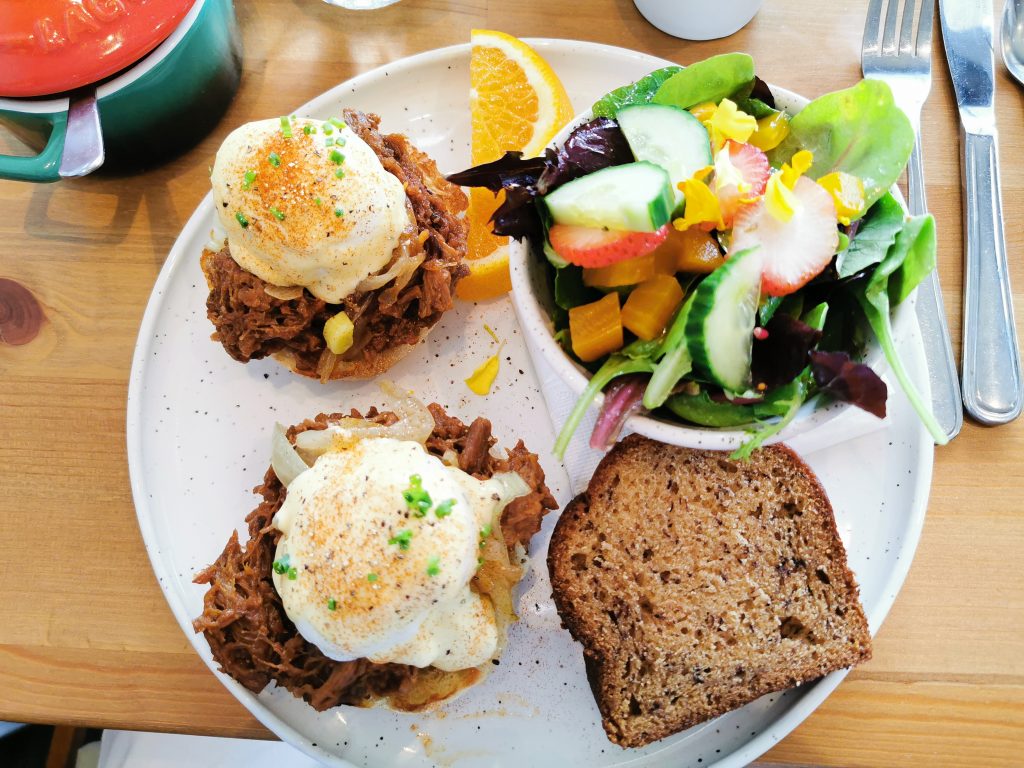
Then there are those who are in creative and precarious occupations usually with a strong entrepreneurial mindset. It’s not always Eggs Benedict on the menu. Peanut butter combo sandwiches – with strawberry jam, bananas, and/or Nutella – were a favourite of a now well-respected entrepreneur in the health and beauty sector. The irony is not lost. Popcorn, three-minute noodles, and “orange cheese” were also memorable among other entrepreneurs I’ve interviewed.  Whether you’re in the NBA, in Paris, or in the kitchen making PB sandwiches, staying hungry is not an option.

So when the inimitable Steve Jobs once told us to “Stay hungry!”, he meant to never be satisfied and always push yourself. But I wonder if he knew the other side of hunger. Just some food for thought. #MotivationMonday

We the (Aging) People

We’re not dead. Yet. My student and I were walking when suddenly a young person approached us from behind with a question, “What’s a boomer?”

He had eavesdropped on our discussion about technology and its impact on Boomers. He doesn’t know? Ouch!

“Ask your parents … or maybe your grandparents.” I winced. “Boomers” is another cohort like “Millennials” or “Gen Zers”. Got it?”

He nodded, “I had no idea.”

We’re not dead yet. Or are we? I started to wonder. From his perspective, we’ve already left and forgot to close the door on our way out. Not so fast. Here’s what the experts say:

On Perspective

Daniel H. Pink is the author of best-selling business books about motivation and sales: “Drive”, “To Sell is Human” and “When: The Scientific Secrets of Perfect Timing.  His TED Talk on motivation has more than 20 million views.

In his 2016 commencement address at Georgetown University, he opens with a 20-second social experiment on perspective-taking which I cite in our “Fearless Networking: Connecting Creatively & Confidently” workshop.

Pink cautions us at the end of his social experiment that as we grow in our career, we gain more power and we tend to lose our perspective-taking ability. We should argue like we’re right but listen like we’re wrong. And don’t believe we’re the smartest person in the room because we’ve just shown that we’re not.

Valuing the differences is the essence of synergy-the mental, the emotional, the psychological differences between people. And the key to valuing those differences is to realize all people see the world, not as it is, but as they are.” ~ Stephen R. Covey, author of The 7 Habits of Highly Effective People

“The world urgently needs more grace.” Ms. Claire M. C. Kennedy, Chair of the Governing Council of the University of Toronto as she addressed the convocation yesterday at University of St. Michael’s College.

On Empathy

Standing in the queue at the grocery store Friday night, a young woman in front of me turned and said she knew me. We met last year at ICA’s “Idea Summit” on inclusivity, diversity, and equity. We swapped stories about our fear of water and swimming. She has her Swim 1 and 2. I’m still at Swim 0. She offered invaluable insights, tips, and her perspective on how she overcame her fear. Inspired, I thanked her and what do you know, her name is “Grace”! “The world urgently needs more grace.”

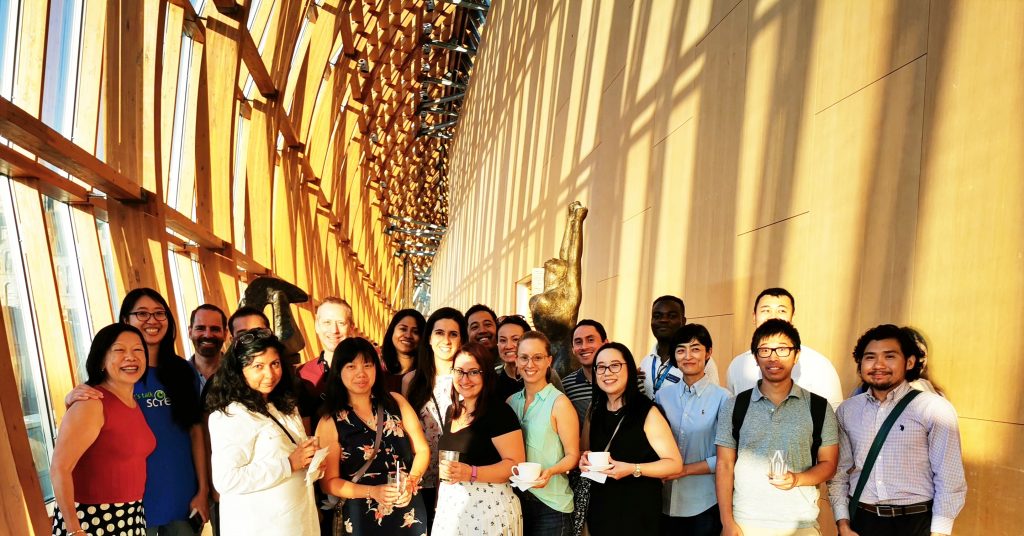
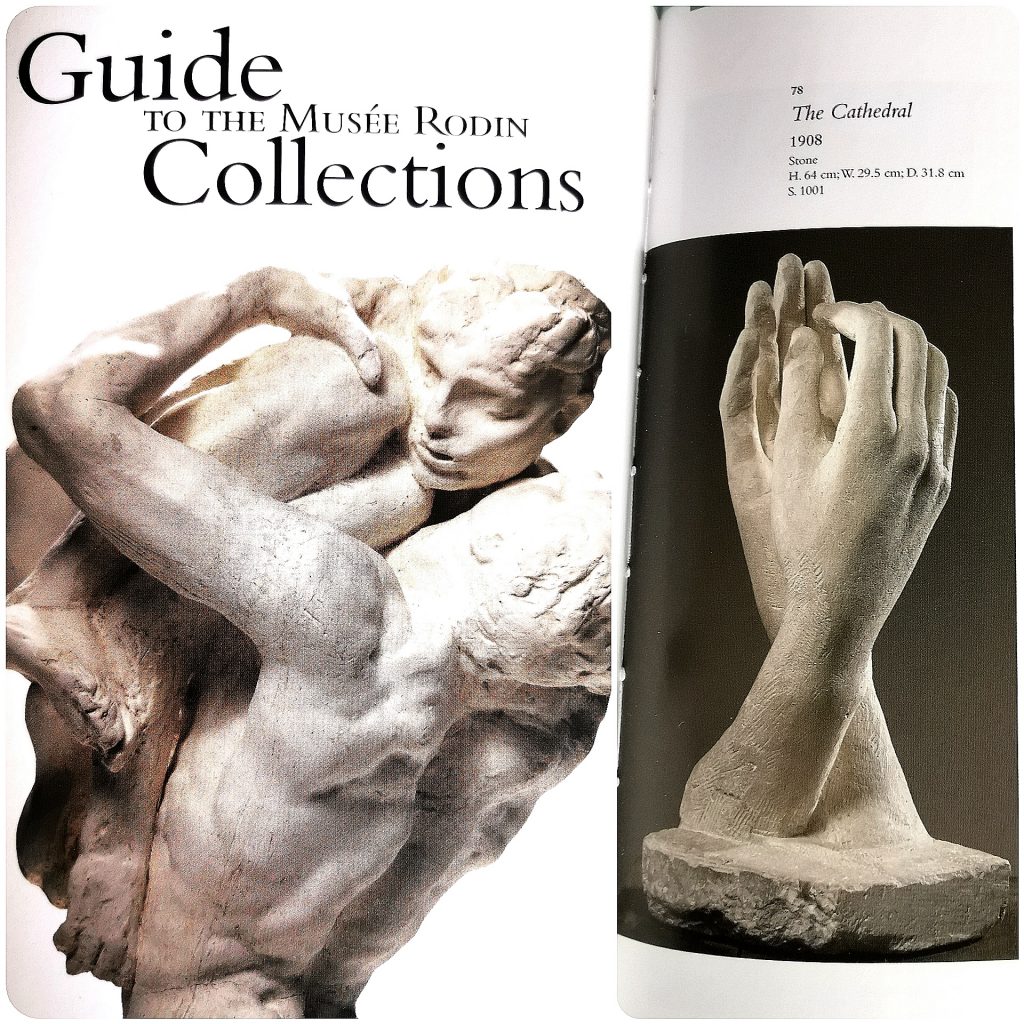
I have a deep appreciation of art but I cannot draw, not even a crooked line, so I took an art sampler from the Art Gallery of Ontario. In one afternoon, our dedicated instructors took us through the painful steps of beginner sculpting, printmaking, drawing, and water colour painting.

An artist's perspective
Auguste Rodin – The Cathedral

Moving from station to station, we gathered our mini-art projects and I wondered if mine deserved fridge magnets but sadly, no. However, I managed to sharpen my perspective-taking ability especially during sculpting. My struggle to mold and shape the clay into an egg helped me appreciate all the labour that Auguste (Rodin) must have expended to achieve mastery.

On Kindness

George Sanders teaches creative writing at Syracuse University. His debut novel “Lincoln in the Bardo” won the 2017 Man Booker Prize. He is included in Time list of the one hundred most influential people in the world.

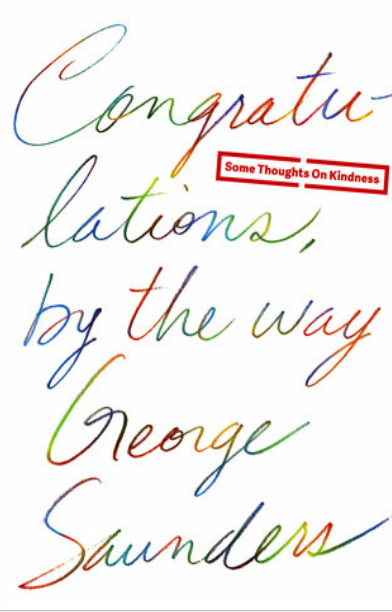
In “Congratulations … By the Way – Some thoughts on Kindness” based on his Class of 2013 convocation address at his university, Professor Saunders shares a poignant story about a new kid named “Ellen” in his 7th Grade and why to this day, he still remembers her.

George Saunders Congratulations By the Way Some Thoughts on Kindness
Some thoughts on Kindness for Graduates

He also asks:

  1. “Why aren’t we kinder?

Apparently we have three “built-in confusions”:

“We’re central to our universe.” Our story is the only story that matters.

“We’re separate from the universe.” – There’s “Us” and then the rest of them.

“We’re permanent.” – You’re going to die but I’m not me.

2. “How do we become kinder?”

Professor Saunders: “Kindness is hard. … Becoming kinder happens naturally with age. As we get older, we come to see how useless it is to be selfish… We get our butts kicked and people come to the rescue and we’re not that separate and we don’t want to be. Most people, as they age, become less selfish and more loving.” Right, Boomers?

I’ll admit I am full of envy whenever I’m talking to someone half my age. They have so much more ahead of them, so many opportunities, and so many days left. I remind them how fortunate they are. Time is on their side. George Saunders (and I) want them to know that “your life is going to be a gradual process of becoming kinder and more loving:  Hurry up. Speed it along. Start right now.”

Because the world needs more “Grace”.