
OK Boomer – the meme that just won’t go away

It’s Ok. Ask a Boomer. We’re not dead. Not yet. My student and I were walking to the subway early November when suddenly a young man (evidently eavesdropping on our conversation about technology and Boomers) from behind yelled out, “What’s a boomer?”

“Excuse me, a what?” a definite sign of an aging Boomer. Is he serious? Does he really not know?

“Ask your parents … or maybe your grandparents.” I winced with one eyebrow arched while sizing up his age. “It’s a category, a demographic like you’re a Millennial or maybe a Gen Z-er. Got it?”

He nodded, “I had no idea.”

I learned later that he knew. His question was a twist on the meme, “OK Boomer”. It had been making its rounds on the Internet. OK Boomer is slang for dissing out-dated opinions coming from the Baby Boomer generation and older. It’s the opposite of “OK”.  I was the one who had no idea.

Here’s a handy reference updated from last year by Mental Floss on who’s a Boomer and who’s not:

  • The Silent Generation: Born 1928-1945 (73-91 years old)
  • Baby Boomers: Born 1946-1964 (54-73 years old)
  • Generation X: Born 1965-1980 (38-54 years old)
  • Millennials: Born 1981-1996 (22-38 years old)
  • Gen Z – Post-Millennials: Born 1997-Present (0-22 years old)

I despair. This inter-generational warfare and anti-Boomer sentiment can be quite harsh and cruel. Andrew Ferguson, staff writer (also a Boomer) at “The Atlantic” recently published  “Everyone Hates the Boomer, OK?” and informed us that while memes come and go quickly, as Boomers we’re still stuck on “OK Boomer”.

Gen Zers decided to have printed T-shirts inscribed with “OKAY BOOMER HAVE A TERRIBLE DAY.” ~ New York Times . More ill will putting our world on tilt. We need to take a step (several steps) back to get some perspective.

Perspective – What the Experts Say

Daniel H. Pink, former Vice-President, Al Gore’s speechwriter, is the author of best-selling business books about motivation and sales.  Pink opened his 2016 commencement address to the graduating class of (still Millennials) at Georgetown University with his clever 20-second social experiment on perspective-taking and showed why “as we grow in our career and gain more power, we tend to lose our perspective-taking ability and to keep it in check.”

Stephen R. Covey, author of “The 7 Habits of Highly Effective People” on perspective: “Valuing the differences is the essence of synergy – the mental, the emotional, the psychological differences between people. And the key to valuing those differences is to realize that all people see the world, not as it is, but as they are.”

Why Two Perspectives Are Better Than One

We gain more perspective by getting outside our comfort zone, meeting new people, and learning new things. At the same, we amp up our empathy. But there are times when empathy doesn’t factor into the human equation:

  1. “We just finished our first meeting so you might like to join us for the next one. Well, maybe not as you can see, we’re much younger than you.” 
  • “She’s been around a long time. Honestly, our ideas are way better. Why doesn’t she just let us take over?”
  • Then there is silence in a working group. Every once in awhile, heads pop up from their screens with wide-eyed stares and still not a word is spoken.

Can’t we find some common ground to collaborate and value our differences? Claire Kennedy, Chair of the Governing Council of the University of Toronto in her convocation message at St. Michael’s College this November, “This is the time when the world urgently needs more grace.”

Perspective and Grace

How do we gain more perspective? One way is to get outside your comfort zone. In my previous post, getting outside your comfort zone means overcoming fear, a work-in-progress.

Standing in the queue at the grocery store recently, a Millennial was in front of me. She turned and greeted me. We had met last year at an ideas summit. We ended up comparing notes on swim lessons which left me inspired, having learned a new strategy on how to overcome my fear of water. Her name is “Grace”. The world urgently needs more grace.

Perspective and Kindness

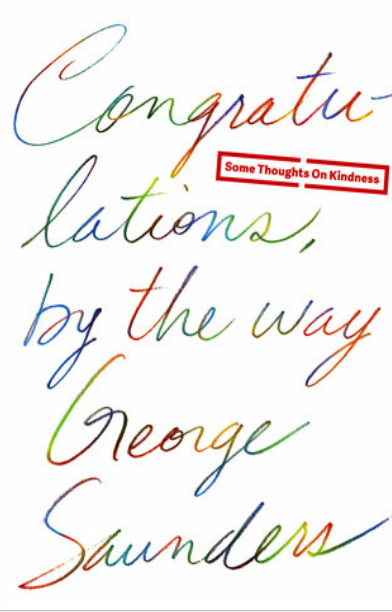
George Sanders teaches creative writing at Syracuse University. His debut novel “Lincoln in the Bardo” won the 2017 Man Booker Prize.  In “Congratulations … By the Way – Some thoughts on Kindness” based on his convocation address for the Class of 2013 at Syracuse University, Professor Saunders is haunted by his memory of a new kid in his 7th Grade named “Ellen” and why to this day, he still remembers her. His two “million-dollar questions” were:

  1. “Why aren’t we kinder?

Apparently, we have these three “built-in confusions”:

  • “We’re central to our universe.” Our story is the only story, the only one that matters.
  • “We’re separate from the universe.” – There’s “Us” and then the rest of them.
  • “We’re permanent.” – You’re going to die but not me.

OK Millennial. OK Boomer.

  • “How do we become kinder?”
  • “Kindness is hard. … Becoming kinder happens naturally with age. As we get older, we come to see how useless it is to be selfish… We get our butts kicked and people come to the rescue and we’re not that separate, and we don’t want to be. Most people, as they age, become less selfish and more loving.”

OK Boomer. OK Millennial.

To the graduating class of 2013 (still Millennials), George Saunders ended his speech: “Your life is going to be a gradual process of becoming kinder and more loving:  Hurry up. Speed it along. Start right now.”

Why? Because the world needs more “Grace”.

One thing Warren Buffet can’t buy on Amazon on Black Friday – time

Black Friday is no ordinary Friday. Big box retailers like Amazon are having the “biggest ever Black Friday” starting one week in advance, of course. Although it’s Prime Time on Amazon, Warren Buffet, the highly successful investor, and us ordinary folks would be hard pressed to buy time. So “I better be careful with it (time). There is no way I will be able to buy more time”, Buffett cautioned his friend, Bill Gates, in their 2018 interview.

Billionaires, Gates and Richard Branson, believe we need to “schedule time to just dream and think freely.” As a non-billionaire, I schedule my dream time efficiently – while I am dreaming. Clarity comes often just before I open my eyes. Allowing our minds to rest and wander gives us access to creativity. Time gives us creativity.

I met Frank O’Dea, co-founder of Second Cup, in 2013 and again in 2018. His struggle with alcohol and abuse is remarkable in “When All you Have is Hope”.  In “Do the Next Right Thing – Surviving Life’s Crises”, he outlined the need to:

  • First find peace.
  • Draw on a higher power.
  • Do the next right thing.

Take the time. Time gives us peace.

I once envied youth for all the time they have ahead of them. I urged them to not waste one single second.  Of course, they laughed at me. They have all the time in the world, don’t they? Apathy perhaps?

Comfortably past mid-life now, I no longer envy nor worry but watch with wonder the way youth race through life at Mach 9.6 speed. What will they do with all that time on their hands? More importantly, what will time give them? More opportunities? More wisdom, experience? More apathy? (surely not)

Will they meet new people #IRL (in real life)? Will they gain new perspectives by learning from others unlike them? Will they rise like Frank O’Dea when faced with unfathomable struggles? Time will tell.

I’ve met Sandra Shamas . When asked if she is a comedian, she says, “only if they laugh”. “My Boyfriend’s Back and There’s Going to be Laundry” was a big hit. We’re the same age. I borrowed a math “quiz” from her Show while making not too fine a point about the value of mentorship and experience. “How much time do we have left to live?” I had asked during a keynote for a bewildered group of aspiring entrepreneurs a few years ago.

We’ve got 30 years if our stars align properly. Sandra had asked: “What’s that in days?” 10,950 days, not a heck of lot. Try hours? 262,800 hours. Really? 15,768,000 minutes. 946,080,000 seconds, yep, that’s all we’ve got.

Looking back 30 years, I was the same age as they were that day. I asked them how many years separated us. 30 years. I then asked them to reflect on their lives so far and what they hoped to accomplish in the next 30 years. I asked them to think about how many more stories they would have to tell in another 30 years.

Then I shared with them a quote from Lubna Olayan now the first Chairwoman of a Saudi bank and one of the most powerful and influential women in the world according to TIME, Forbes, and Fortune. In “Fortune September 2015 , she said: “The more challenges you face in life, the more of life you experience – this lived experience gives one the “influence” to impact others’ lives.”

As mentors and mentees across the generations, we would make time to listen to understand one another instead of dismissing ourselves as Millennials and Boomers. We might learn something from one another that might help us save time. Anyone need more time?

Time gives us opportunities to share our experience and knowledge. Lifelong learning takes a long time, a life time. regardless of our age. Why not collaborate and co-create? Time is ticking so we best start now. #cometogether

We the (Aging) People

We’re not dead. Yet. My student and I were walking when suddenly a young person approached us from behind with a question, “What’s a boomer?”

He had eavesdropped on our discussion about technology and its impact on Boomers. He doesn’t know? Ouch!

“Ask your parents … or maybe your grandparents.” I winced. “Boomers” is another cohort like “Millennials” or “Gen Zers”. Got it?”

He nodded, “I had no idea.”

We’re not dead yet. Or are we? I started to wonder. From his perspective, we’ve already left and forgot to close the door on our way out. Not so fast. Here’s what the experts say:

On Perspective

Daniel H. Pink is the author of best-selling business books about motivation and sales: “Drive”, “To Sell is Human” and “When: The Scientific Secrets of Perfect Timing.  His TED Talk on motivation has more than 20 million views.

In his 2016 commencement address at Georgetown University, he opens with a 20-second social experiment on perspective-taking which I cite in our “Fearless Networking: Connecting Creatively & Confidently” workshop.

Pink cautions us at the end of his social experiment that as we grow in our career, we gain more power and we tend to lose our perspective-taking ability. We should argue like we’re right but listen like we’re wrong. And don’t believe we’re the smartest person in the room because we’ve just shown that we’re not.

Valuing the differences is the essence of synergy-the mental, the emotional, the psychological differences between people. And the key to valuing those differences is to realize all people see the world, not as it is, but as they are.” ~ Stephen R. Covey, author of The 7 Habits of Highly Effective People

“The world urgently needs more grace.” Ms. Claire M. C. Kennedy, Chair of the Governing Council of the University of Toronto as she addressed the convocation yesterday at University of St. Michael’s College.

On Empathy

Standing in the queue at the grocery store Friday night, a young woman in front of me turned and said she knew me. We met last year at ICA’s “Idea Summit” on inclusivity, diversity, and equity. We swapped stories about our fear of water and swimming. She has her Swim 1 and 2. I’m still at Swim 0. She offered invaluable insights, tips, and her perspective on how she overcame her fear. Inspired, I thanked her and what do you know, her name is “Grace”! “The world urgently needs more grace.”

I have a deep appreciation of art but I cannot draw, not even a crooked line, so I took an art sampler from the Art Gallery of Ontario. In one afternoon, our dedicated instructors took us through the painful steps of beginner sculpting, printmaking, drawing, and water colour painting.

An artist's perspective
Auguste Rodin – The Cathedral

Moving from station to station, we gathered our mini-art projects and I wondered if mine deserved fridge magnets but sadly, no. However, I managed to sharpen my perspective-taking ability especially during sculpting. My struggle to mold and shape the clay into an egg helped me appreciate all the labour that Auguste (Rodin) must have expended to achieve mastery.

On Kindness

George Sanders teaches creative writing at Syracuse University. His debut novel “Lincoln in the Bardo” won the 2017 Man Booker Prize. He is included in Time list of the one hundred most influential people in the world.

In “Congratulations … By the Way – Some thoughts on Kindness” based on his Class of 2013 convocation address at his university, Professor Saunders shares a poignant story about a new kid named “Ellen” in his 7th Grade and why to this day, he still remembers her.

George Saunders Congratulations By the Way Some Thoughts on Kindness
Some thoughts on Kindness for Graduates

He also asks:

  1. “Why aren’t we kinder?

Apparently we have three “built-in confusions”:

“We’re central to our universe.” Our story is the only story that matters.

“We’re separate from the universe.” – There’s “Us” and then the rest of them.

“We’re permanent.” – You’re going to die but I’m not me.

2. “How do we become kinder?”

Professor Saunders: “Kindness is hard. … Becoming kinder happens naturally with age. As we get older, we come to see how useless it is to be selfish… We get our butts kicked and people come to the rescue and we’re not that separate and we don’t want to be. Most people, as they age, become less selfish and more loving.” Right, Boomers?

I’ll admit I am full of envy whenever I’m talking to someone half my age. They have so much more ahead of them, so many opportunities, and so many days left. I remind them how fortunate they are. Time is on their side. George Saunders (and I) want them to know that “your life is going to be a gradual process of becoming kinder and more loving:  Hurry up. Speed it along. Start right now.”

Because the world needs more “Grace”.

Does Anybody Know What Time It Is?

Where would I be without My Millennials? They give me the down low on what’s dope and what’s not. They’re amused because I’m on IG (Instagram) Stories. They taught me. In fact, I consider myself lucky to call them my friends.

But I struggle with what is known as “FOMO” – Fear of Missing Out. Why do Millennials wait until the last minute to make commitments? To dig deeper, I took a poll, not in Instagram Stories, but IRL (in real life).

The Value of Time

“Time” means now, immediate and imminent, for Millennials. Fuelled by FOMO, they race through multiple “what if” scenarios. What if I commit now? What do I have to give up? What if I hedge and wait a bit longer? What if something better comes along?

But decisions, big and small, will be made…or sometimes not. If analysis paralysis creeps in, they are left with only a default position which is far from ideal. By not making decisions, they allow the universe to unfold as it should.

The Speed of Time

It’s hard to not be part of the “arms race” – fast, faster, fastest. We want the fastest or be the fastest “fill-in-the-blank” in the world.

My Millennial takes his multi-tasking mantra to the max. He “reads” (listens) “books” (audio) at 2.5 times the speed of normal speech while doing his chores at home happily listening to a voice like “Alvin the Chipmunk” chirping away in his ears. Millennials love multi-tasking.

The Perception of Time

Reacting at a rapid pace, a swift swipe right or left means everything is urgent and everything is important to Millennials. Nothing is not urgent. Nothing is not important. After 30 years, Stephen R. Covey’s “Time Management Matrix” (“The 7 Habits of Highly Effective People”) has been downsized from four quadrants to two halves. Time seems infinite for Millennials.

And The End of Time

What’s urgent and important to My Gen has become very urgent and very important. We pause to reflect and then react. Paradoxically, by not having much time left, we take more time in deciding how we want to fill our calendars with what matters most to us.

We all want time to be on our side. We contemplate the past and plan for the future. Or we can use our time wisely now and not let it use us. According to Mo Gawdat, former Chief Business Officer, Google (X), “Life is now and now is amazing.” Agree?