Last Friday night, we were three women left standing,
or dare I say, “swimming” in our community centre’s pool out of twelve who had
started in “Older Adult Swim One” (very tentative beginners) nine weeks ago.
Like a wet bathing suit, my fear of water still
clung to me. But that night, it felt different. The water was warm, almost
inviting after coming out of the cold. The pool was all ours. The other classes
finished a week earlier. So peaceful, so calm, and under the watchful eye of
Andrew, our Gen Z instructor, we got to practice on anything we wanted.
We all tread water for awhile, arms and legs going
off in all directions, different speeds, awkward motions with our life jackets
on until we tired out.
Then while the others were swimming, I tried to float
(again) on my back. I tried everything during these nine Friday lessons.
Missing a few didn’t help. I floated with the noodle, that lengthy lifeline.
I tried to float without the noodle still gripping
tightly to the pool edge with one hand and then letting go. I tried
visualization but this jack knife pose sunk me. I tried positive self talk but I
had too much on my mind. I tried to relax but I kept breathing at the wrong time
so that water kept going up my nose.
Then I stopped trying so hard and resorted to a
silent prayer. “Please if there is a God, let me float even for 2 seconds.” I let
go of the edge and I finally felt this odd sensation for first 2 seconds,
then again for 3 seconds. Was this floating? I could hear cheers from my swim-mates
and Andrew. “You did it!” I did? I did! Funny how moving towards your goal can
feel so empowering and motivating even for two seconds. I walked out of the
pool wondering when I could get back in again to experiment and try again.
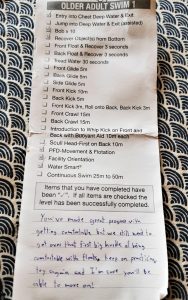
My Swim Report Card
I did jump into the deep end!
Our “report cards” were displayed on the table as we exited. We should have given Andrew a medal for bravery. He survived teaching adults for the first time. My swim mates perfected their kicking and gliding. We all had our small victories. But as in all victories, it is the journey we revel and relish. We started out as strangers, four generations – Gen X, Y, Z plus Boomer, as equals in a learning environment that made us braver, friendlier, and kinder. #whenweallwinweallwin
It’s Ok. Ask a Boomer. We’re not dead. Not yet. My student and I were walking to the subway early November when suddenly a young man (evidently eavesdropping on our conversation about technology and Boomers) from behind yelled out, “What’s a boomer?”
“Excuse me, a what?” a definite sign of an aging Boomer. Is he serious? Does he really not know?
“Ask your parents … or maybe your grandparents.” I winced with one eyebrow arched while sizing up his age. “It’s a category, a demographic like you’re a Millennial or maybe a Gen Z-er. Got it?”
He nodded, “I had no idea.”
I learned later that he knew. His question was a twist on the meme, “OK Boomer”. It had been making its rounds on the Internet. OK Boomer is slang for dissing out-dated opinions coming from the Baby Boomer generation and older. It’s the opposite of “OK”. I was the one who had no idea.
Here’s a handy reference updated from last year by Mental Floss on who’s a Boomer and who’s not:
The Silent Generation: Born 1928-1945 (73-91 years old)
Baby Boomers: Born 1946-1964 (54-73 years old)
Generation X: Born 1965-1980 (38-54 years old)
Millennials: Born 1981-1996 (22-38 years old)
Gen Z – Post-Millennials: Born 1997-Present (0-22 years old)
I despair. This inter-generational warfare and anti-Boomer sentiment can be quite harsh and cruel. Andrew Ferguson, staff writer (also a Boomer) at “The Atlantic” recently published “Everyone Hates the Boomer, OK?” and informed us that while memes come and go quickly, as Boomers we’re still stuck on “OK Boomer”.
Gen Zers decided to have printed T-shirts inscribed with “OKAY BOOMER HAVE A TERRIBLE DAY.” ~ New York Times . More ill will putting our world on tilt. We need to take a step (several steps) back to get some perspective.
Perspective – What the Experts Say
Daniel H. Pink, former Vice-President, Al Gore’s speechwriter, is the author of best-selling business books about motivation and sales. Pink opened his 2016 commencement address to the graduating class of (still Millennials) at Georgetown University with his clever 20-second social experiment on perspective-taking and showed why “as we grow in our career and gain more power, we tend to lose our perspective-taking ability and to keep it in check.”
Stephen R. Covey, author of “The 7 Habits of Highly
Effective People” on perspective: “Valuing the differences is the essence of
synergy – the mental, the emotional, the psychological differences between
people. And the key to valuing those differences is to realize that all people
see the world, not as it is, but as they are.”
Why Two Perspectives Are Better Than One
We gain more perspective by getting outside our comfort
zone, meeting new people, and learning new things. At the same, we amp up our
empathy. But there are times when empathy doesn’t factor into the human
equation:
“We
just finished our first meeting so you might like to join us for the next one. Well,
maybe not as you can see, we’re much younger than you.”
“She’s
been around a long time. Honestly, our ideas are way better. Why doesn’t she
just let us take over?”
Then there is silence in a working group. Every once in awhile, heads pop up from their screens with wide-eyed stares and still not a word is spoken.
Can’t we find some common ground to collaborate and value our differences?Claire Kennedy, Chair of the Governing Council of the University of Toronto in her convocation message at St. Michael’s College this November, “This is the time when the world urgently needs more grace.”
Perspective and Grace
How do we gain more perspective? One way is to get outside
your comfort zone. In my previous post, getting outside your comfort zone means
overcoming fear, a work-in-progress.
Standing in the queue at the grocery store recently, a
Millennial was in front of me. She turned and greeted me. We had met last year
at an ideas summit. We ended up comparing notes on swim lessons which left me
inspired, having learned a new strategy on how to overcome my fear of water. Her
name is “Grace”. The world urgently needs more grace.
Perspective and Kindness
George Sanders teaches creative writing at Syracuse
University. His debut novel “Lincoln in the Bardo” won the 2017 Man
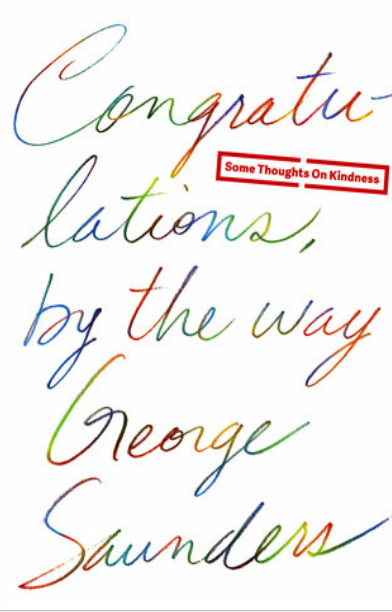
Booker Prize. In “Congratulations …
By the Way – Some thoughts on Kindness” based on his convocation
address for the Class of 2013 at Syracuse University, Professor
Saunders is haunted by his memory of a new kid in his 7th Grade named
“Ellen” and why to this day, he still remembers her. His two “million-dollar
questions” were:
“Why aren’t we kinder?
Apparently, we have these
three “built-in confusions”:
“We’re central to
our universe.” Our story is the only story, the only one that
matters.
“We’re separate from
the universe.” – There’s “Us” and then the rest of them.
“We’re permanent.” – You’re going to die but not me.
OK Millennial. OK Boomer.
“How do we become kinder?”
“Kindness is hard. …
Becoming kinder happens naturally with age. As we get older, we come to see how
useless it is to be selfish… We get our butts kicked and people come to the
rescue and we’re not that separate, and we don’t want to be. Most people, as
they age, become less selfish and more loving.”
OK Boomer. OK
Millennial.
To the graduating
class of 2013 (still Millennials), George Saunders ended his speech: “Your
life is going to be a gradual process of becoming kinder and more loving: Hurry up. Speed it along. Start right now.”
We’re not dead. Yet. My student and I were walking when
suddenly a young person approached us from behind with a question, “What’s a
boomer?”
He had eavesdropped on our discussion about technology and its impact on Boomers. He doesn’t know? Ouch!
“Ask your parents … or maybe your grandparents.” I winced. “Boomers” is another cohort like “Millennials” or “Gen Zers”. Got it?”
He nodded, “I had no idea.”
We’re not dead yet. Or are we? I started to wonder. From his perspective, we’ve already left and forgot to close the door on our way out. Not so fast. Here’s what the experts say:
On Perspective
Daniel H. Pink is the author of best-selling business books about motivation and sales: “Drive”, “To Sell is Human” and “When: The Scientific Secrets of Perfect Timing. His TED Talk on motivation has more than 20 million views.
Pink cautions us at the end of his social experiment that as we grow in our career, we gain more power and we tend to lose our perspective-taking ability. We should argue like we’re right but listen like we’re wrong. And don’t believe we’re the smartest person in the room because we’ve just shown that we’re not.
Valuing the differences is the essence of synergy-the mental, the emotional, the psychological differences between people. And the key to valuing those differences is to realize all people see the world, not as it is, but as they are.” ~ Stephen R. Covey, author of The 7 Habits of Highly Effective People
“The world urgently needs more grace.” Ms. Claire M. C. Kennedy, Chair of the Governing Council of the University of Toronto as she addressed the convocation yesterday at University of St. Michael’s College.
On Empathy
Standing in the queue at the grocery store Friday night, a young woman in front of me turned and said she knew me. We met last year at ICA’s “Idea Summit” on inclusivity, diversity, and equity. We swapped stories about our fear of water and swimming. She has her Swim 1 and 2. I’m still at Swim 0. She offered invaluable insights, tips, and her perspective on how she overcame her fear. Inspired, I thanked her and what do you know, her name is “Grace”! “The world urgently needs more grace.”
I have a deep appreciation of art but I cannot draw, not even a crooked line, so I took an art sampler from the Art Gallery of Ontario. In one afternoon, our dedicated instructors took us through the painful steps of beginner sculpting, printmaking, drawing, and water colour painting.
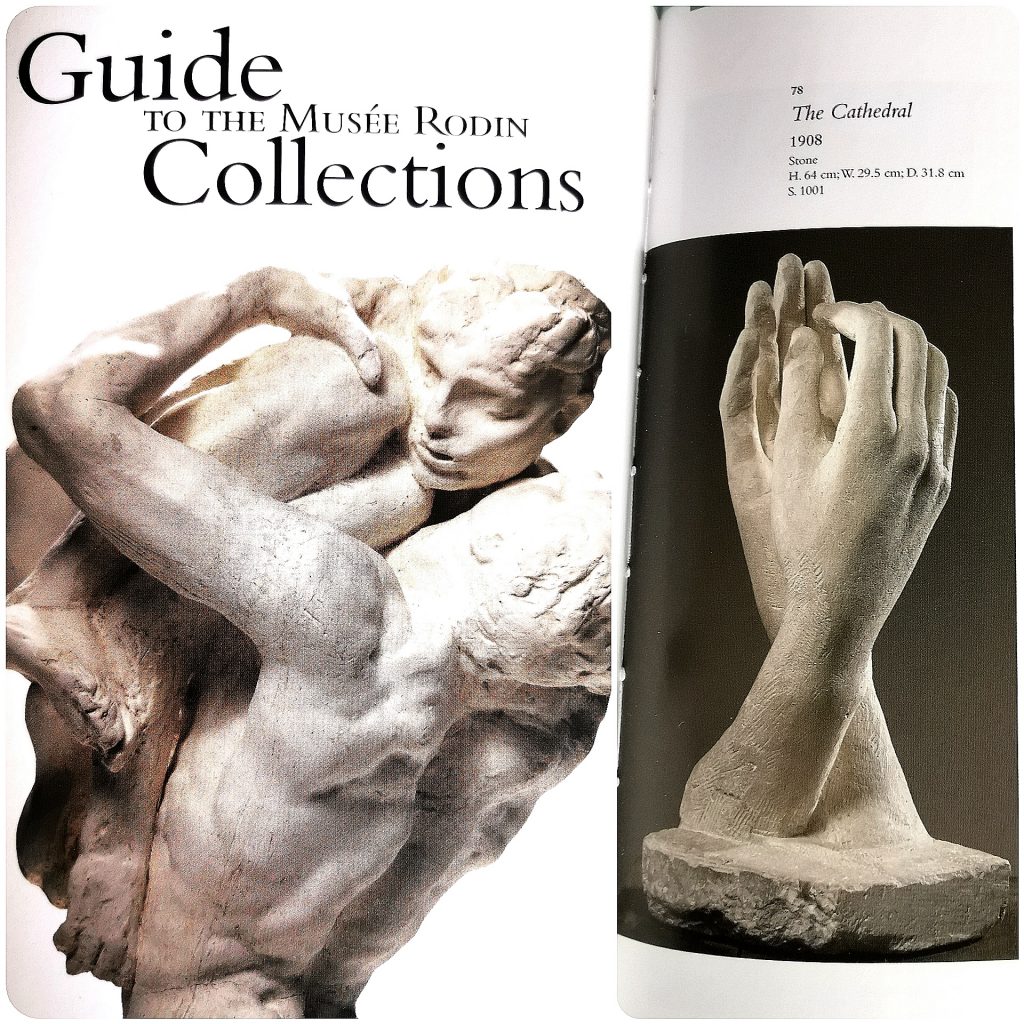
Auguste Rodin – The Cathedral
Moving from station to station, we gathered our mini-art projects and I wondered if mine deserved fridge magnets but sadly, no. However, I managed to sharpen my perspective-taking ability especially during sculpting. My struggle to mold and shape the clay into an egg helped me appreciate all the labour that Auguste (Rodin) must have expended to achieve mastery.
On Kindness
George Sanders teaches creative writing at Syracuse University. His debut novel “Lincoln in the Bardo” won the 2017 Man Booker Prize. He is included in Time list of the one hundred most influential people in the world.
In “Congratulations … By the Way – Some thoughts on Kindness” based on his Class of 2013 convocation address at his university, Professor Saunders shares a poignant story about a new kid named “Ellen” in his 7th Grade and why to this day, he still remembers her.
Some thoughts on Kindness for Graduates
He also asks:
“Why aren’t we kinder?
Apparently we have three “built-in confusions”:
“We’re central to our universe.” Our story is the only story that matters.
“We’re separate from the universe.” – There’s “Us” and then the rest of them.
“We’re permanent.” – You’re going to die but I’m not me.
2. “How do we become kinder?”
Professor Saunders: “Kindness is hard. … Becoming kinder happens naturally with age. As we get older, we come to see how useless it is to be selfish… We get our butts kicked and people come to the rescue and we’re not that separate and we don’t want to be. Most people, as they age, become less selfish and more loving.” Right, Boomers?
I’ll admit I am full of envy whenever I’m talking to someone half my age. They have so much more ahead of them, so many opportunities, and so many days left. I remind them how fortunate they are. Time is on their side. George Saunders (and I) want them to know that “your life is going to be a gradual process of becoming kinder and more loving: Hurry up. Speed it along. Start right now.”